Common Legal Mistakes to Avoid During MLM Company Registration
Avoid common legal mistakes during MLM company registration. Learn compliance tips to prevent penalties, bans, and regulatory issues.

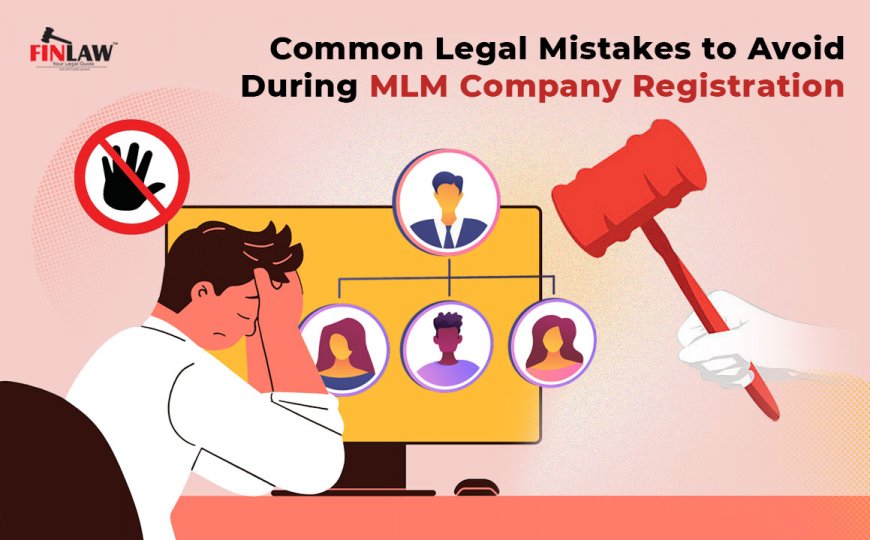
Starting a Multi-Level Marketing (MLM) business can be highly rewarding, but it is also one of the most legally scrutinized business models in India and globally. While many entrepreneurs focus on product sourcing, compensation plans, and marketing strategies, legal compliance during MLM company registration is often misunderstood or neglected. This oversight can lead to serious consequences such as penalties, business shutdowns, criminal liability, or being branded as an illegal pyramid scheme.
This article breaks down the most common legal mistakes entrepreneurs make during MLM company registration, explains why they are risky, and shows how to avoid them. Whether you are a first-time founder or restructuring an existing MLM business, understanding these pitfalls can save you from costly legal trouble later.
Why Legal Compliance Is Crucial in MLM Company Registration
MLM businesses operate in a sensitive regulatory space because they involve recruitment-based commissions. Regulators closely examine MLM companies to ensure they are not disguised pyramid or money circulation schemes.
In India, MLM companies must comply with:
-
Companies Act, 2013
-
State-specific direct selling guidelines
-
FEMA (for foreign investment)
-
Income Tax Act and GST laws
Even a small legal misstep during mlm company registration can raise red flags with authorities, banks, payment gateways, and investors.
Mistake 1: Choosing the Wrong Business Structure
One of the earliest and most common mistakes is registering the MLM business under an unsuitable legal structure.
Why This Is a Problem
Some founders start as:
-
Sole proprietorships
-
Partnership firms
While these structures may appear simpler, they are not ideal for MLM businesses, which require:
-
Higher credibility
-
Scalability
-
Compliance transparency
Banks, regulators, and distributors often distrust MLM businesses that are not registered as a Private Limited Company or LLP.
Best Practice
For smooth mlm company registration, a Private Limited Company is usually the safest and most accepted structure due to:
-
Limited liability
-
Better compliance framework
-
Easier funding and payment gateway approvals
Mistake 2: Not Aligning the Business Model With Direct Selling Laws
Many MLM startups copy compensation plans from foreign companies without adapting them to Indian law.
Why This Is Dangerous
Under Indian regulations:
-
Income must primarily come from product or service sales, not recruitment
-
Entry fees without genuine product value can be illegal
-
Unlimited downline incentives are suspicious
If your model focuses more on recruitment than sales, authorities may classify it as a pyramid scheme, which is illegal.
How to Avoid This
Before finalizing your plan:
-
Get a legal review of your compensation structure
-
Ensure commissions are linked to actual product movement
-
Clearly separate joining benefits from earning potential
A legally compliant model is a core requirement of proper mlm company registration.
Mistake 3: Skipping a Properly Drafted MLM Agreement
Many businesses use generic or poorly written distributor agreements downloaded from the internet.
Why This Is a Serious Mistake
A weak MLM agreement can:
-
Fail to define distributor rights and obligations
-
Expose the company to lawsuits
-
Violate consumer protection laws
-
Create confusion about commission payouts
In disputes, courts and regulators heavily rely on written agreements.
What a Valid MLM Agreement Should Include
-
Clear commission and payout structure
-
Termination and suspension clauses
-
Product return and refund policy
-
Code of conduct for distributors
-
Dispute resolution mechanism
A professionally drafted agreement strengthens your mlm company registration and protects long-term operations.
Mistake 4: Ignoring Consumer Protection (Direct Selling) Rules, 2021
Many founders are unaware that MLM businesses fall under India’s Consumer Protection Act.
Common Violations
-
No grievance redressal officer
-
No published refund or cooling-off policy
-
Misleading income claims
-
Lack of customer support contact details
Consequences
-
Heavy penalties
-
Consumer complaints
-
Business suspension by authorities
Compliance Tip
Ensure your MLM company:
-
Appoints a grievance officer
-
Publishes policies on the website
-
Maintains transparent communication
Ignoring these rules can invalidate your mlm company registration in practice, even if your company is legally incorporated.
Mistake 5: Not Registering Trademarks and Intellectual Property
Many MLM companies delay trademark registration until after brand growth.
Why This Is Risky
Without trademark protection:
-
Competitors can copy your brand name or logo
-
Distributors may misuse branding
-
Legal disputes become expensive
Best Practice
Alongside mlm company registration, register:
-
Company name
-
Brand name
-
Logo
-
Product names (where applicable)
This ensures long-term brand security and distributor confidence.
Mistake 6: Improper Product Compliance and Documentation
MLM businesses often deal with health, wellness, cosmetics, or nutritional products.
Legal Oversights Include
-
Selling products without the required licenses
-
No quality or safety certifications
-
Exaggerated health claims
Applicable Authorities
Depending on product type:
-
FSSAI (food and supplements)
-
CDSCO (medical products)
-
BIS or other regulatory bodies
Selling non-compliant products can result in product bans and criminal liability, regardless of how perfect your mlm company registration is.
Mistake 7: Failing to Set Up Proper Tax Registrations
Many MLM startups postpone tax compliance to save costs.
Common Tax Mistakes
-
Not registering for GST
-
Incorrect GST classification
-
No TDS compliance on commissions
-
Poor bookkeeping
Why This Matters
Tax authorities closely monitor MLM businesses due to commission-based payouts. Non-compliance can trigger audits and penalties.
Best Practice
-
Register for GST if applicable
-
Maintain transparent commission records
-
Issue proper invoices
Tax compliance is an inseparable part of lawful mlm company registration.
Mistake 8: Making Unrealistic Income Claims
This is one of the fastest ways to attract regulatory action.
Examples of Illegal Claims
-
“Guaranteed income”
-
“Earn lakhs per month without effort”
-
Lifestyle promises without disclaimers
Legal Risk
Misleading claims violate:
-
Consumer Protection laws
-
Advertising standards
-
Direct selling guidelines
Safe Approach
-
Use income disclaimers
-
Base claims on average earnings
-
Train distributors on compliant marketing
No matter how well your mlm company registration is done, misleading promotions can shut down operations.
Mistake 9: Lack of State-Level Compliance Awareness
Direct selling regulations may vary by state.
Overlooked Issues
-
Local registrations
-
State-specific guidelines
-
Regional enforcement practices
Some states actively monitor MLM activities, and ignorance is not a defense.
Solution
-
Monitor state notifications
-
Adapt policies regionally
-
Seek ongoing legal compliance support
Mistake 10: Not Conducting Periodic Legal Audits
Many founders assume that once mlm company registration is complete, compliance is permanent.
Reality
Laws change. Business models evolve. Regulatory expectations increase.
Risks of No Audit
-
Outdated agreements
-
Non-compliant commission plans
-
Website policy gaps
Best Practice
Conduct annual or bi-annual:
-
Legal audits
-
Compliance reviews
-
Policy updates
This proactive approach protects your MLM business from future disruptions.
How Avoiding These Mistakes Strengthens Your MLM Business
Avoiding legal mistakes during mlm company registration offers long-term benefits:
-
Easier bank and payment gateway approvals
-
Higher distributor trust
-
Reduced regulatory risk
-
Better scalability and investor appeal
A legally strong foundation allows you to focus on growth rather than damage control.
Final Thoughts
MLM company registration is not just about incorporating a business—it is about building a legally sustainable ecosystem. Most MLM failures do not happen due to poor products or lack of distributors but because of avoidable legal mistakes made at the registration stage.
By choosing the right structure, complying with direct selling laws, drafting proper agreements, protecting intellectual property, and maintaining ongoing compliance, you can build an MLM business that is both profitable and legally sound.
If you are planning or already undergoing mlm company registration, treating legal compliance as an investment rather than a cost will define your long-term success.
What's Your Reaction?