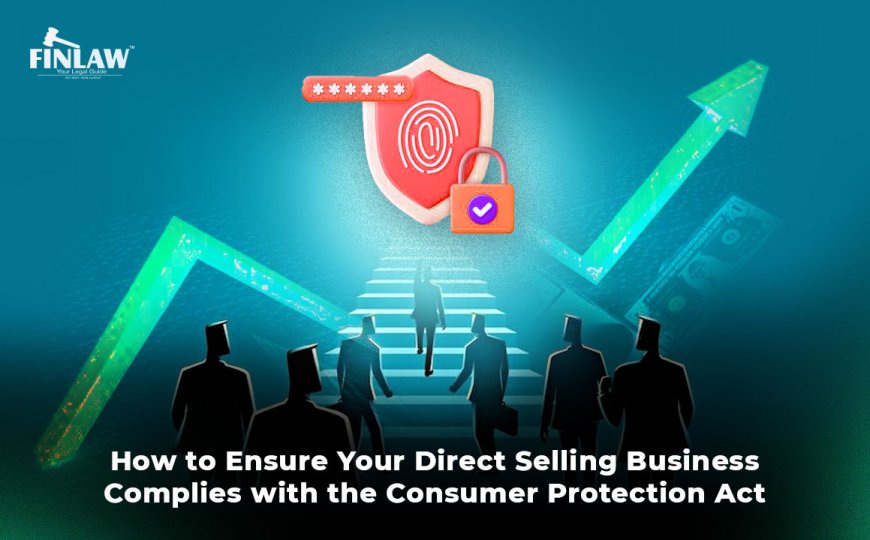
How to Ensure Your Direct Selling Business Complies with the Consumer Protection Act in India
Ensure your direct selling business complies with India’s Consumer Protection Act. Learn rules, compliance steps, and legal best practices to avoid penalties.
The direct selling business model has gained massive popularity in India due to its low entry barriers, flexible operations, and strong earning potential. From wellness products and cosmetics to household goods and digital services, direct selling companies operate across diverse sectors.
However, this rapid growth has also led to concerns around misleading claims, unethical recruitment practices, and consumer exploitation. To address these issues, the Government of India introduced the Consumer Protection Act, 2019, along with the Consumer Protection (Direct Selling) Rules, 2021.
If you are running—or planning to start—a direct selling business, compliance is not optional. This detailed guide explains how to ensure your direct selling business complies with the Consumer Protection Act, while also building trust, credibility, and long-term sustainability.
Understanding the Direct Selling Business Model
A direct selling business involves the sale of goods or services directly to consumers without using traditional retail stores. Sales usually happen through independent direct sellers using person-to-person interaction, online platforms, social media, or home demonstrations.
Unlike pyramid or money circulation schemes, a legitimate direct selling business earns revenue primarily from product sales, not from recruitment fees.
Because this model directly engages consumers, it is closely monitored under consumer protection laws in India.
Why Consumer Protection Act Compliance Is Critical
The Consumer Protection Act, 2019 (CPA 2019) was enacted to safeguard consumer rights and prevent unfair trade practices. For direct selling businesses, compliance is essential because:
-
Consumers interact directly with sellers, increasing the risk of misrepresentation
-
The sector has historically been misused for illegal pyramid schemes
-
Non-compliance can lead to penalties, bans, and criminal liability
-
Compliance builds consumer confidence and brand reputation
The Direct Selling Rules, 2021, notified under CPA 2019, provide a dedicated compliance framework for this industry.
Key Legal Framework Governing Direct Selling in India
1. Consumer Protection Act, 2019
This Act defines consumer rights, unfair trade practices, misleading advertisements, and grievance redressal mechanisms.
2. Consumer Protection (Direct Selling) Rules, 2021
These rules specifically regulate direct selling entities and direct sellers, setting compliance standards related to registration, transparency, advertising, and consumer protection.
Together, these laws ensure ethical operations and consumer safety in the direct selling ecosystem.
Mandatory Compliance Requirements for a Direct Selling Business
1. Legal Registration and Physical Presence in India
Every direct selling business must be legally registered in India as:
-
A company under the Companies Act, 2013
-
A Limited Liability Partnership (LLP)
-
A registered partnership firm
Additionally, the business must maintain a registered office and physical address in India. Operating without proper registration is a direct violation of the law.
2. Prohibition of Pyramid and Money Circulation Schemes
One of the most important compliance requirements is the strict ban on pyramid schemes.
A direct selling business must ensure that:
-
Income is generated only through product or service sales
-
No entry fees, registration fees, or mandatory purchases are charged for recruitment
-
Incentives are not based solely on recruiting new members
Any structure resembling a pyramid scheme is illegal and punishable under Indian law.
3. Written Contracts with Direct Sellers
Every direct seller must be appointed through a written agreement before they begin operations. This contract should clearly define:
-
Rights and obligations of both parties
-
Commission structure and payment terms
-
Conditions for termination or suspension
-
Code of conduct and ethical responsibilities
Written agreements protect both the company and the sellers while ensuring transparency.
4. Identity Verification of Direct Sellers
Your direct selling business must verify and maintain records of:
-
Identity proof
-
Address proof
-
Contact details of each direct seller
This step prevents misuse of the platform and ensures accountability if consumer complaints arise.
5. Transparent Product Information and Pricing
Consumer protection laws strictly prohibit misleading product claims. To stay compliant:
-
Product descriptions must be accurate and complete
-
Pricing, taxes, return policies, and warranties must be clearly disclosed
-
Claims related to health benefits, earnings, or performance must be verifiable
False or exaggerated claims can attract heavy penalties and legal action.
6. Ethical Advertising and Marketing Practices
All advertisements—online or offline—must comply with the CPA 2019. A direct selling business must ensure that:
-
Advertisements are truthful and not deceptive
-
Earnings or income potential is not exaggerated
-
Testimonials are genuine and not fabricated
The company is responsible for advertisements made by its direct sellers, making internal monitoring essential.
7. Robust Grievance Redressal Mechanism
Every direct selling business must establish a consumer grievance redressal system, including:
-
Dedicated grievance officer
-
Contact details (email, phone number, address) displayed prominently
-
Time-bound response and resolution of complaints
Prompt grievance handling not only ensures legal compliance but also strengthens customer trust.
8. Clear Refund, Return, and Cancellation Policies
Consumer-friendly return and refund policies are a legal necessity. These policies must:
-
Be easy to understand
-
Be communicated clearly at the time of sale
-
Avoid unreasonable conditions
Unfair return policies can be treated as unfair trade practices under consumer law.
Additional Laws Applicable to Direct Selling Businesses
Compliance with the Consumer Protection Act alone is not enough. A direct selling business must also adhere to:
Legal Metrology Laws
Ensuring accurate labeling, quantity declarations, and pricing.
GST and Tax Laws
Proper GST registration, invoicing, and tax compliance.
E-Commerce Rules (if applicable)
If products are sold online, Consumer Protection (E-Commerce) Rules, 2020 must be followed.
Common Compliance Mistakes to Avoid
Many direct selling businesses face legal trouble due to avoidable errors, such as:
-
Promising unrealistic income or success stories
-
Allowing sellers to make false health or financial claims
-
Operating without written seller agreements
-
Ignoring consumer complaints or delaying responses
-
Failing to monitor seller conduct
Avoiding these mistakes is critical for long-term business survival.
Consequences of Non-Compliance
Failure to comply with the Consumer Protection Act can result in:
-
Heavy monetary penalties
-
Orders to discontinue business operations
-
Blacklisting by authorities
-
Loss of consumer trust and brand value
-
Criminal proceedings in severe cases
Regulators take violations by direct selling businesses seriously, especially where consumer harm is involved.
Best Practices for Long-Term Compliance
To ensure ongoing compliance and growth:
-
Conduct regular legal and compliance audits
-
Train direct sellers on ethical selling and legal responsibilities
-
Maintain updated records of sellers and transactions
-
Consult legal experts before launching new schemes or products
-
Monitor advertising and promotional content closely
Proactive compliance is always cheaper and safer than reactive legal defense.
Conclusion
Running a compliant direct selling business in India requires more than just selling products—it demands transparency, accountability, and respect for consumer rights. The Consumer Protection Act, 2019 and Direct Selling Rules, 2021 provide a clear roadmap for ethical operations.
By following the legal requirements, avoiding unfair trade practices, and prioritizing consumer trust, your direct selling business can grow sustainably while staying on the right side of the law.
A compliant business is not just legally secure—it is more credible, more trusted, and more successful in the long run.
What's Your Reaction?